





Tbilisi, 20 September 2026
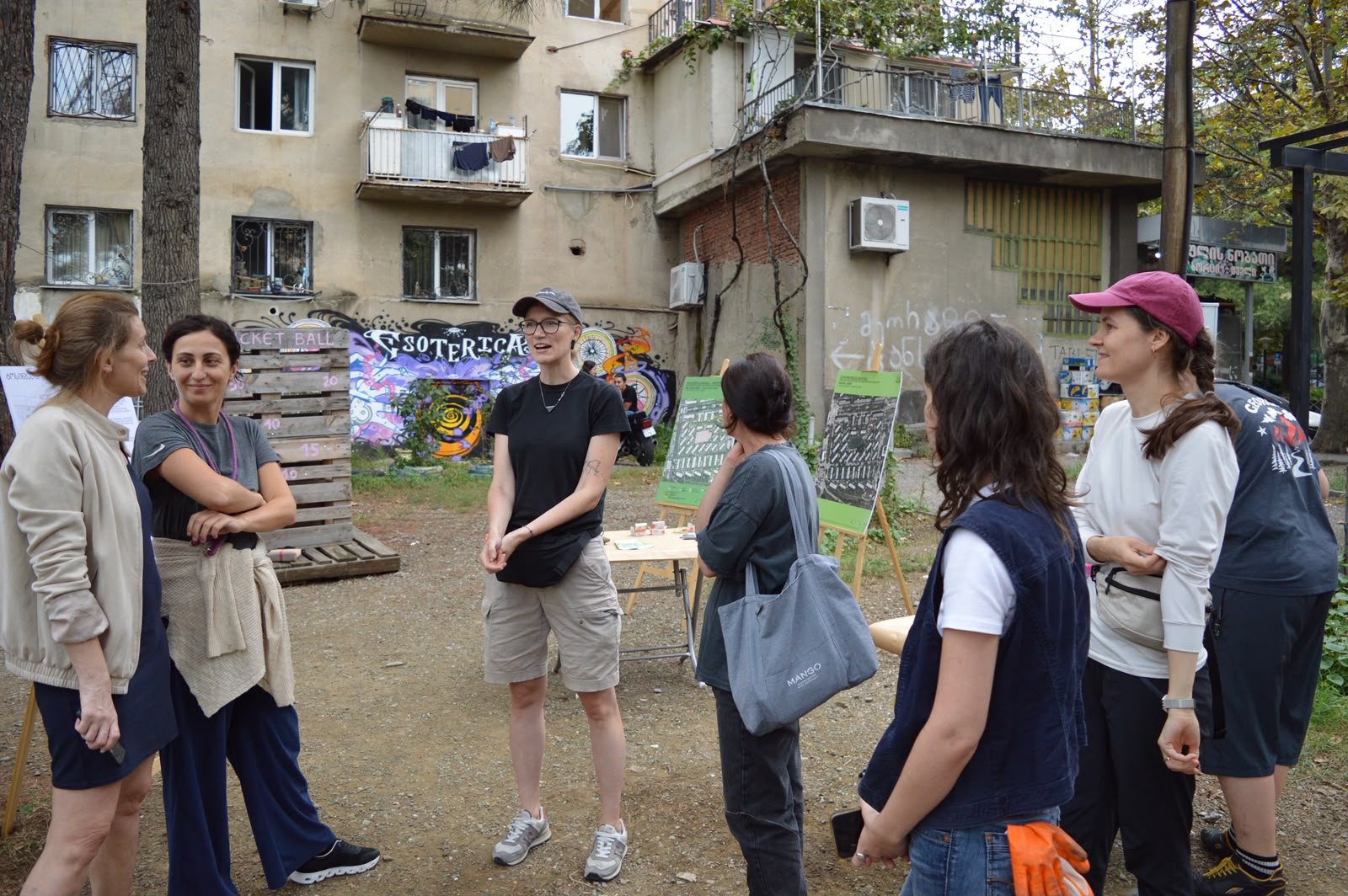
On 20 September 2026, the cbc team met with residents of Block VI in Tbilisi’s Vazha-Pshavela neighbourhood, in cooperation with The GreenSuperblock – Tbilisi Living Lab, an initiative that brings researchers and residents together to develop ideas for the block’s future. While the Living Lab hosted a planting workshop for children, we invited adults to talk about how the open spaces of the block are used today, who looks after them, and what they might need. A small group of residents joined us for an in-depth conversation, together with the team of a local tattoo studio who use the space every day and are keen to see it change. The open setting of the workshop drew in passers-by, several of whom contributed their own perspectives on the neighbourhood. The workshop is part of the preparation of pilot study Transform for Resilience by Subproject 3: Urban Spatial Transformations.
We structured the conversation around the findings of our earlier fieldwork in the block. Walking through the neighbourhood, we found that almost every open space is watched over and cared for by someone, and governed by its own rules, even when these are unwritten or exist only as handmade signs telling people not to park or not to sit.
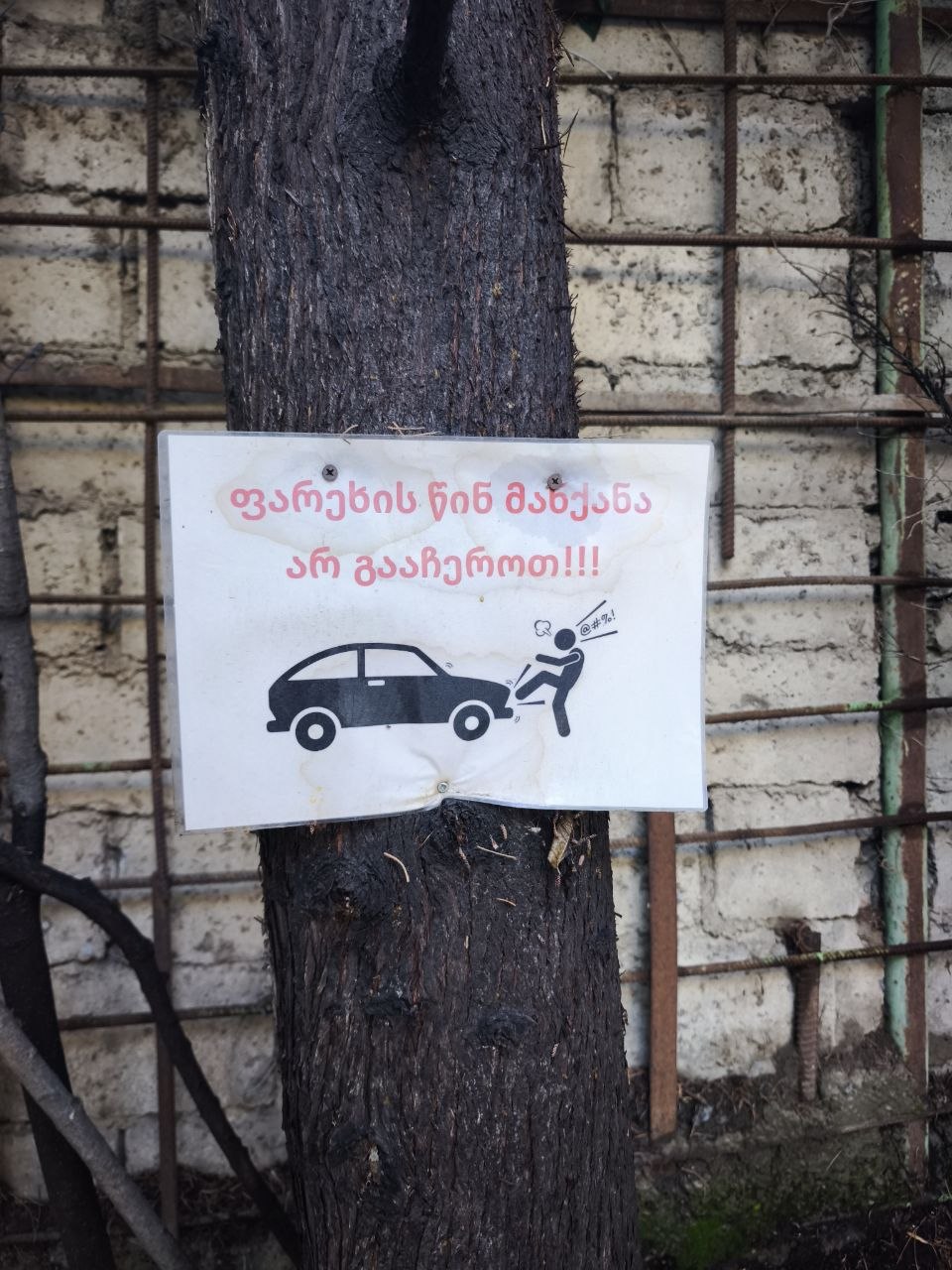
What looks like shared public space is in fact a highly differentiated social landscape. During the workshop we therefore asked residents concrete questions: who uses this place, who takes care of it, who decides what can change here, and what happens when someone breaks an unwritten rule. Two themes came up again and again. The first was litter, both across the neighbourhood and at this spot in particular, with no one clearly responsible for it. The second was how care turns into control: where residents begin to look after a plot, as they have in many open spaces of the area, it tends to become accessible only to that group. Even where the municipality has redeveloped open space, the result mostly serves one group: the new areas are largely playgrounds, which leaves little quiet green space for those who simply want to spend time outdoors. We had already encountered this logic while inviting people to the workshop. As we went around different parts of the neighbourhood, many residents asked why they should help shape or even discuss another space when they already had their own courtyard, which they would rather improve for themselves and their neighbours.
The conversation points to a question at the heart of our pilot, one that urban resilience research has long asked: resilience of what, and for whom? Over the past decades, residents, car owners and businesses have each secured pieces of open space that the Soviet-era estate was designed to leave undivided and shared by all. Each of these arrangements is a form of resilience from below for those who made it; together, they leave little room for space that belongs to everyone. Litter shows this most clearly: it does not stop at the boundaries of claimed plots, yet no one feels it is theirs to deal with. Formally, these spaces are the municipality’s responsibility; in practice, residents step in where they can, and a public responsibility shifts onto private shoulders. How shared space can be cared for without being enclosed, starting with the problems that no one claims, is the question we are taking forward as we prepare the pilot intervention.
We thank all the residents who shared their time and stories with us, The GreenSuperblock – Tbilisi Living Lab, and our partners Ia Kupatadze and Nano Zazanoshvili at Ilia State University.