





4–15 November 2025
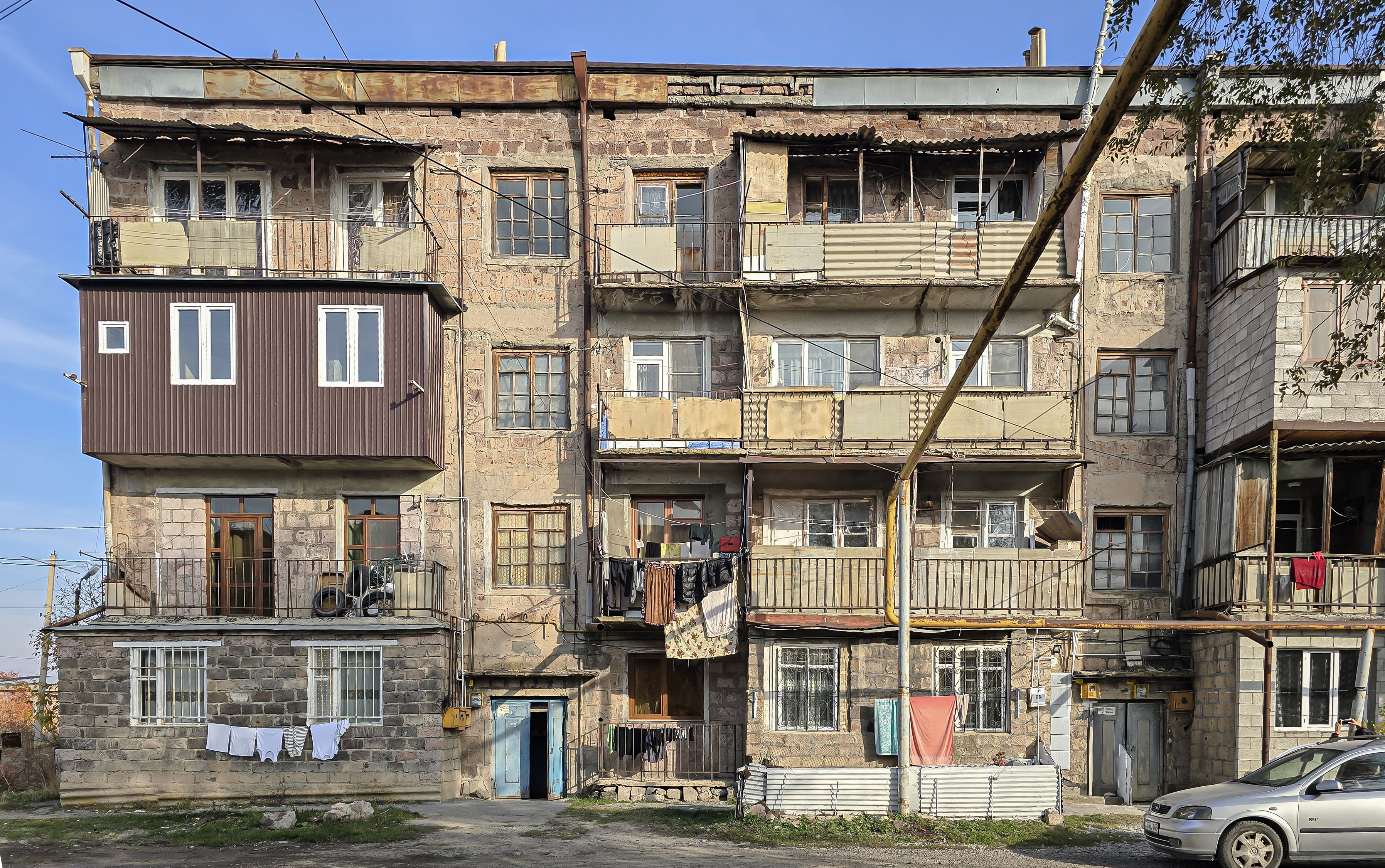
In November 2025, the Integrated Action Approach team, Elena Batunova and Albina Davletshina, carried out fieldwork in Gyumri, Armenia, focusing on housing management in a city shaped by long-term post-disaster conditions. The visit was built on earlier research phases but concentrated specifically on how residential buildings are maintained and governed decades after the 1988 Spitak earthquake.
The fieldwork involved meetings with local residents, architects, housing managers, and technical staff responsible for everyday building maintenance. These conversations revealed a fragmented yet adaptive system operating under severe financial constraints and persistent seismic uncertainty. While some expert assessments describe Gyumri as seismically “safe” today, this view remains contested. Housing professionals pointed to buildings that were never reinforced after the earthquake, underestimated risk categories, and the lack of systematic monitoring of ageing structures.
A recurring theme was the transfer of responsibility without adequate resources. After the collapse of the Soviet Union, much of the housing stock was privatised, placing maintenance obligations on residents with limited financial capacity. Extremely low maintenance fees make comprehensive repairs almost impossible, pushing housing managers toward improvised solutions: temporary fixes, cooperation with residents, and reuse of materials from abandoned industrial and residential sites.
Extensive visual surveys complemented the interviews. The team examined central and peripheral residential areas, as well as zones of unfinished or abandoned construction planned under the Soviet system but never fully realised. These suspended territories — partly built neighbourhoods disconnected from infrastructure and everyday urban life — remain a structural challenge for the city. Some have been gradually adapted and inhabited; others have deteriorated into unused or polluted spaces.
Overall, the November fieldwork highlighted housing resilience in Gyumri not as the result of comprehensive reconstruction, but as an accumulation of negotiated practices. National regulations, inherited planning frameworks, professional expertise, and everyday improvisation intersect in sustaining residential life under ongoing uncertainty.