





‘The communist past is ideologically gone, yet viscerally present in its materiality.’ This observation, made by Maja Babić and Tino Mager (Blog Post) in their opening chapter, captures what makes state-socialist architecture so difficult to deal with: the regimes have collapsed, but their buildings remain, still inhabited, still contested, still capable of provoking fierce arguments over what they mean and who they belong to.
Contentious Spaces: Uncovering the Hidden Narratives of State-Socialist Built Heritage (Leuven University Press, 2026, Open Access) (here link to the Book) takes this tension as its starting point. Edited by Babić and Mager, the volume grows out of years of collaborative work, including conferences, workshops, and scholarly exchange, around the architectural heritage of the former Eastern Bloc and Yugoslavia. Heritage decisions made today, about what to protect, what to demolish, and what to commemorate, are inseparable from ongoing struggles over national identity, memory politics, and whose version of the past counts as legitimate. The chapters that follow develop this argument through specific cases spanning a wide geography, from relief sculpture in Minsk to housing estates in Sarajevo, from Yugoslav youth labour brigades to sports halls in Romania and Central Asian industrial cities.
The contribution by CBC researchers Polina Gundarina and Marina Sapunova ‘Chapter 8. Beyond the Narrative of the "Wild 1990s": Cultural and Architectural Legacy of Soviet Industry’ examines the Palace of Culture of Metal Plant Workers, a monumental Stalinist building completed in 1957, still fully operational, still financed by the successor company of the Soviet-era plant, and still celebrated in the local press and city administration. But the chapter is equally about what this celebration obscures. The Chelyabinsk Metal Plant and the socialist city built around it were constructed on what Soviet ideology framed as terra nullius, nobody's land, erasing the pre-existing settlements and the history of forced labour that made the project possible.
For the co-authors, a historian and an urban planner, the collaboration meant asking each other questions we would not have arrived at alone. Urban planning sees the spatial logic of selective investment and neglect. History sees the layered narratives that make that logic seem natural and inevitable. Together, they reveal something the buildings themselves cannot say: heritage decisions are always about whose story gets told.
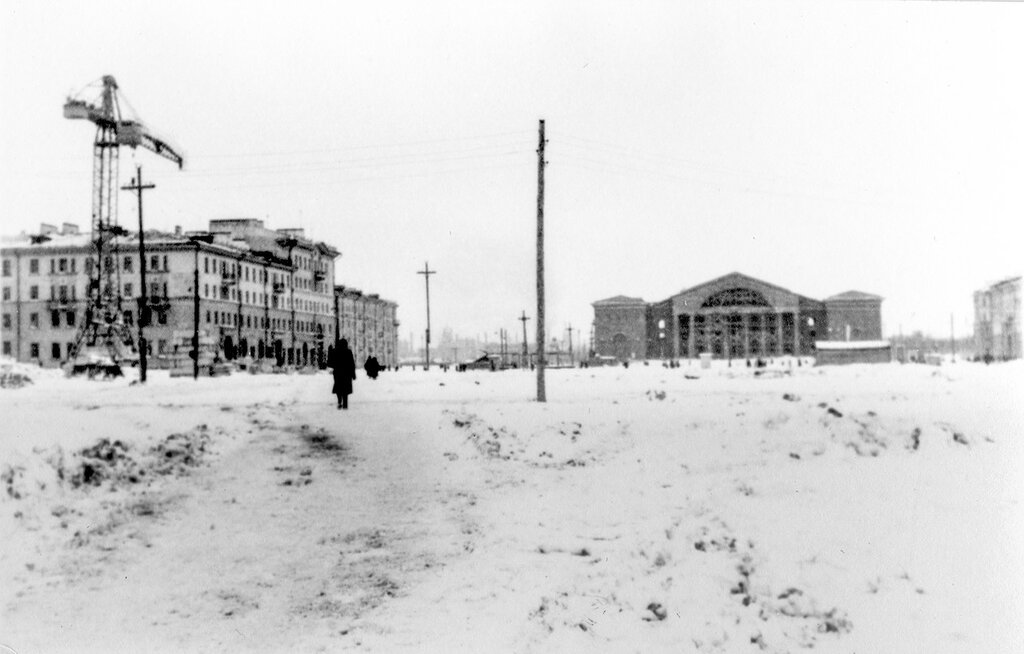
Photo of the Palace of Culture
The Palace of Culture of Metal Plant Workers during a celebrational event in 1972 commemorate the 50th anniversary of the USSR. (Photographed by Liudmila Lebedera, published on https://pastvu.com/p/2337471)
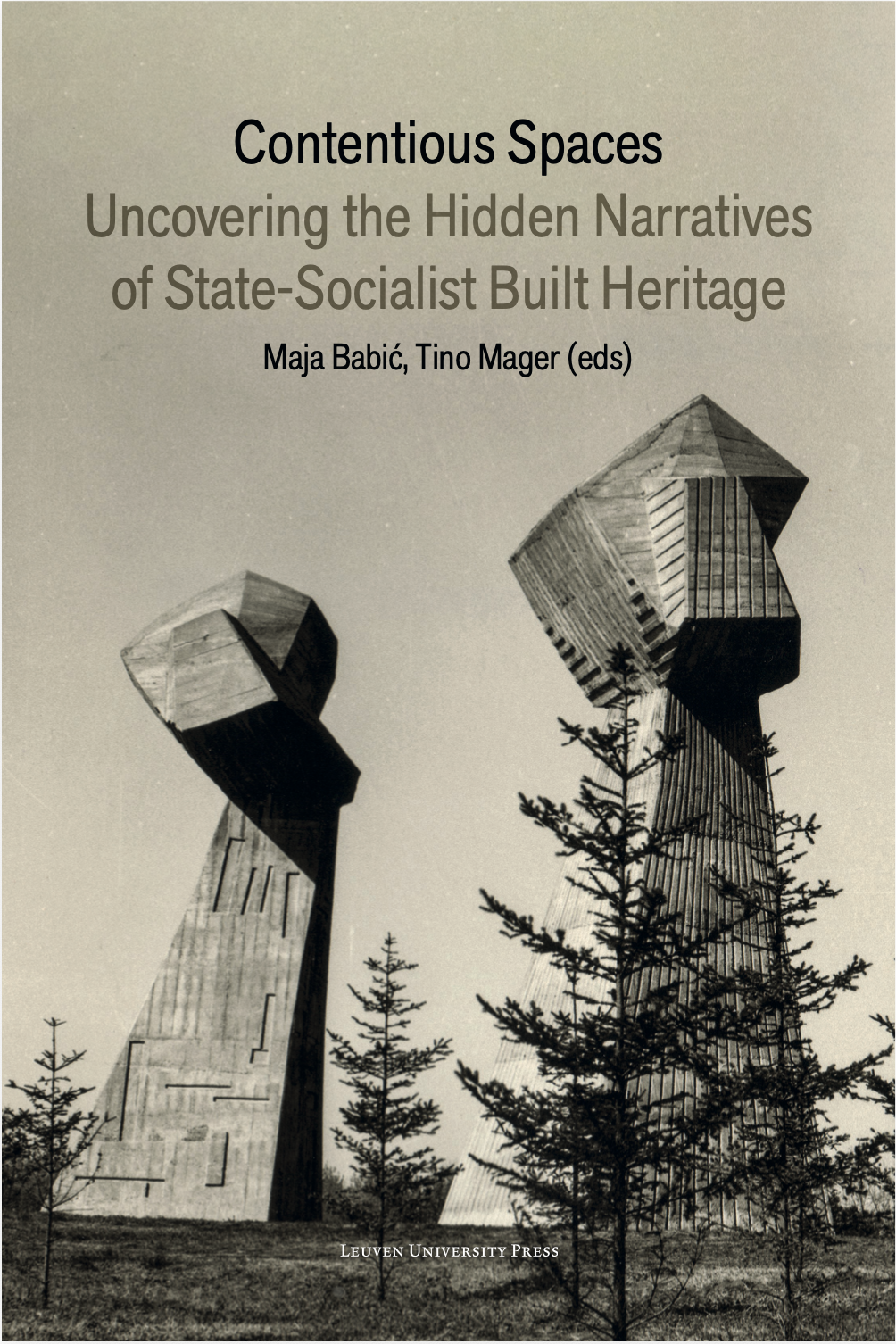
Photo of the Book Cover
Link to the Blog
Link to the Book
From the editor's Chapter: // The state-socialist urban and architectural heritage stands as a signifier of a recent past, yet its actors are still among us. // Architecture is not only a physical trace but also a vessel of forgotten or contested meanings, awaiting decoding.
From our Chapter: // The plant's lasting influence created a narrative that erased the history of pre-existing settlements and forced labour camps, shaping its history as a Soviet interpretation of terra nullius. // New Soviet sotsgorods were mythologised as triumphs over nature and 'nobody's land,' highlighting human willpower and creating a civilisation without a past. // ‘Our palace is a cornerstone of our community, and the Metal Plant will do everything to keep the place running.’ //