





Tallinn, 7–11 September 2026
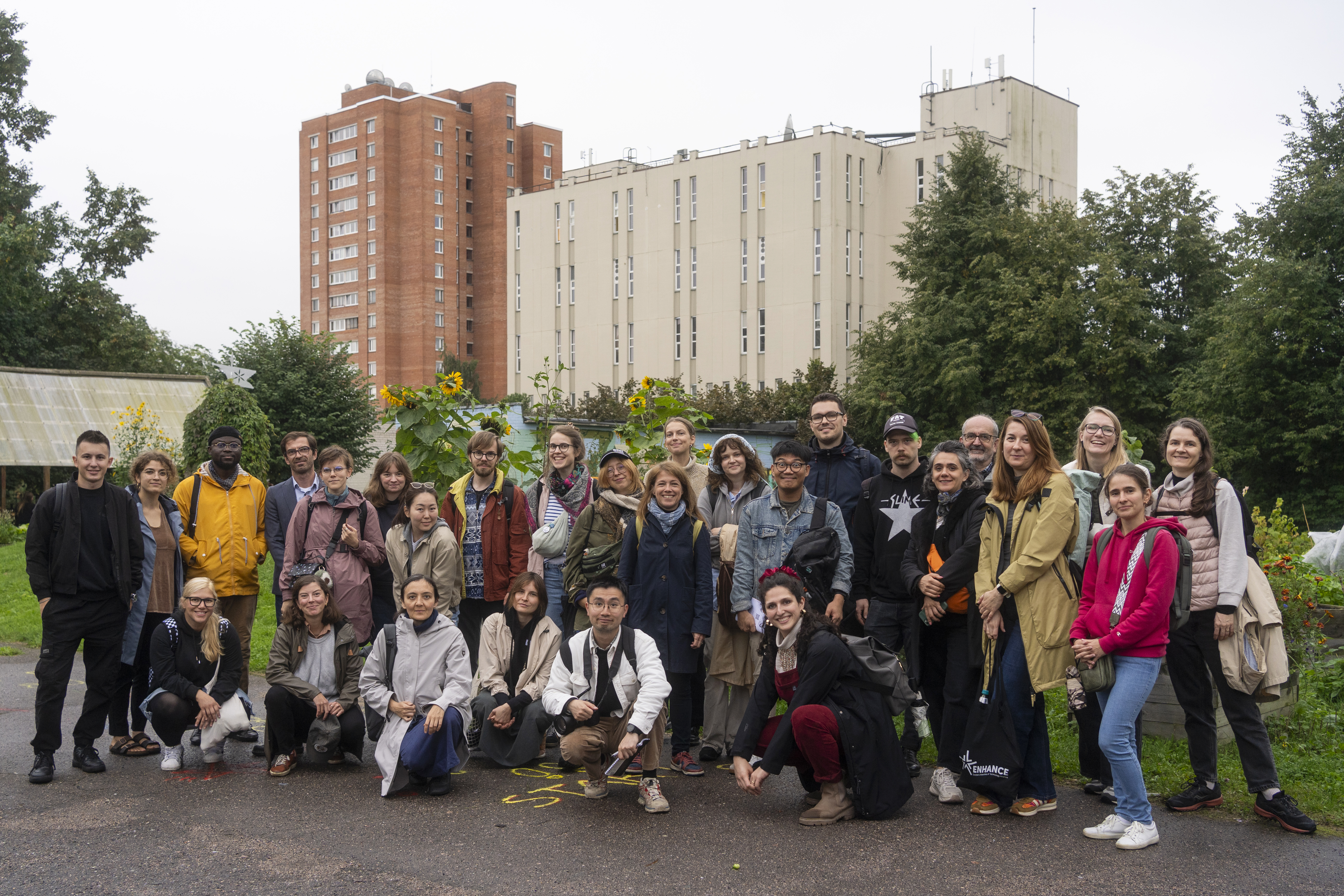
Photo by: Saara Mildeberg
From 7 to 11 September 2026, the cities.building.culture project organized the international PhD School “The Future of Mass Housing Heritage: Exploring Resilient Sustainability of the Socialist-Era Housing Districts” in Tallinn, Estonia. Hosted in collaboration with local partners Tallinn University (Tauri Tuvikene) and Tallinn University of Technology (Kimmo Lylykangas and Kaidi Põldoja), the five-day programme brought together 23 PhD students from 15 countries, including Germany, Estonia, Ukraine, Kosovo, Hungary, Chile, Türkiye, Montenegro, China, Nigeria and Norway. The participants represented a diverse range of disciplines, including architecture, urban planning, anthropology, biology and geography. Alongside 15 invited academics and local experts, they explored current challenges of mass housing estates ranging from energy-efficient renovation and demographic change to governance, mobility, public space, and community participation.
Over five intensive days, we moved between lectures, presentations, seminars, discussions with local experts, city tours and, naturally, fieldwork in Lasnamäe, Tallinn’s largest mass housing district. Day 1 was opened by cities.building.culture project lead Arnold Bartetzky (GWZO Leipzig), who offered a broad introduction to the heritage of mass housing across different national contexts. Architects Helena Männa, Keiti Lige and Elina Liiva introduced the Estonian case, providing insights into the process of designing the Estonian Pavilion at the 2025 Venice Biennale, “Let Me Warm You”.
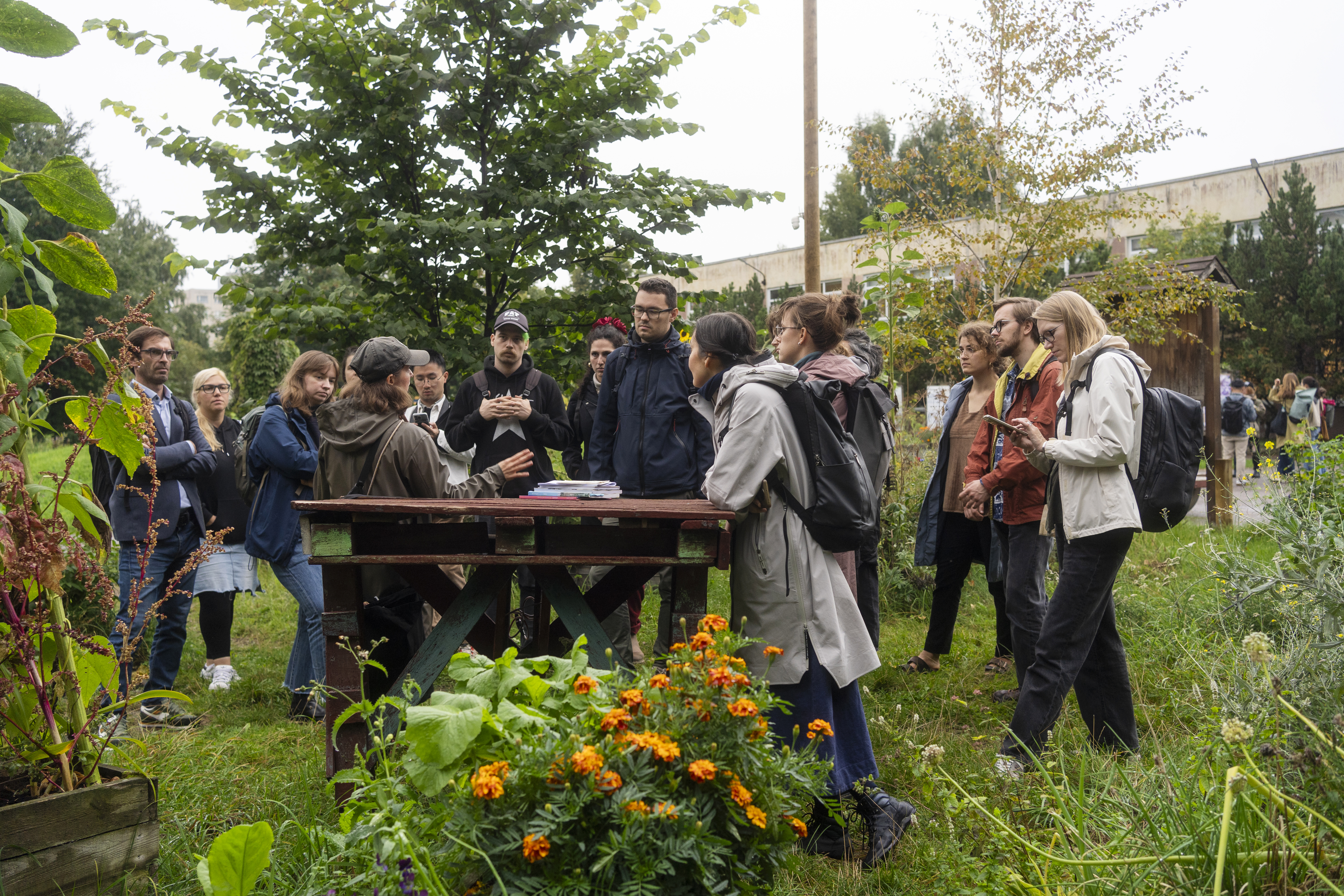
Photo by: Saara Mildeberg
An important part of the programme was the exchange between PhD researchers from different universities and disciplinary backgrounds. During two poster sessions, participants presented their ongoing doctoral research on mass housing, residential heritage, urban transformation, governance, environmental adaptation, and related topics, creating a platform for discussion and comparative perspectives across different geographical contexts.
Day 2 featured a dense programme of seminars exploring the historical development and contemporary challenges of Tallinn’s mass housing estates. Epp Lankots (Estonian Academy of Arts) examined their architectural history and planning, while Tauri Tuvikene (Tallinn University) focused on open spaces and mobility. Anneli Kährik (University of Tartu) addressed demographic change and housing governance.
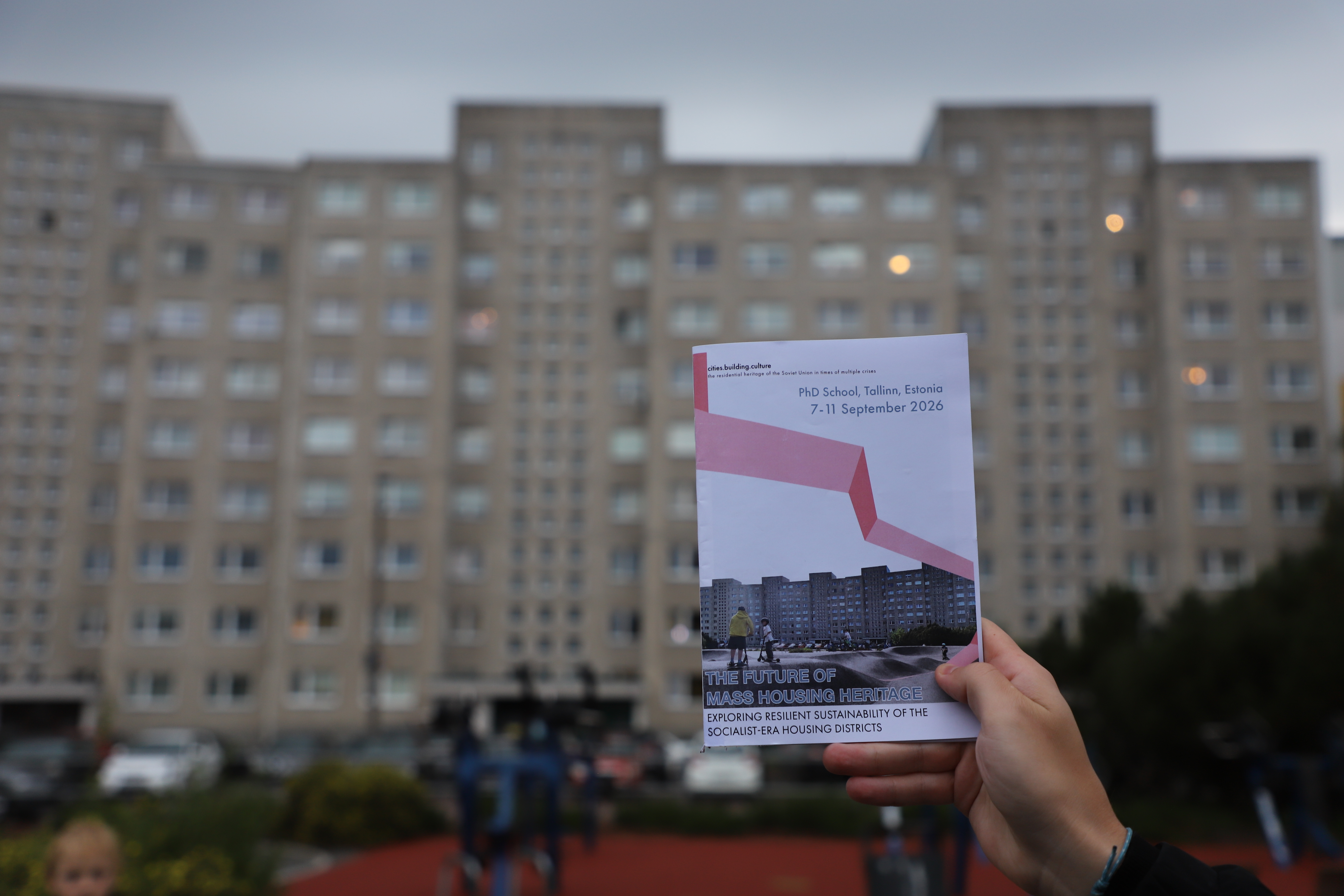
Photo by: Yixuan Yang
The project leads of the cities.building.culture project also shared insights into their recent projects and publications. Christa Reicher (RWTH Aachen University) presented the Atlas of Large Housing Estates, while Barbara Engel (Karlsruhe Institute of Technology (KIT)) introduced The Green Superblock in Tbilisi: Towards Neighborhood Resilience. The day concluded with a special keynote by Ukrainian architect Yulian Chaplinsky (AVR-DEVELOPMENT, Lviv), who documented Lviv’s rich urban history from the 19th century onwards, highlighting the city’s current challenges under the conditions of war.
Day 3 marked the beginning of the more practice-oriented part of our programme. The morning started with a series of insightful presentations from local experts. Kaidi Põldoja shared recent projects in Lasnamäe, Tallinn’s largest mass housing district. Kadri Auväärt (Soft Academy) presented an initiative focused on neighbourhood renovation, while Kalle Kuusk (Estonian Business and Innovation Agency) introduced new technologies and approaches for the renovation of mass housing. Katre Jõgeva (Tallinn Municipality) concluded the session with an overview of the city’s current projects and competitions.
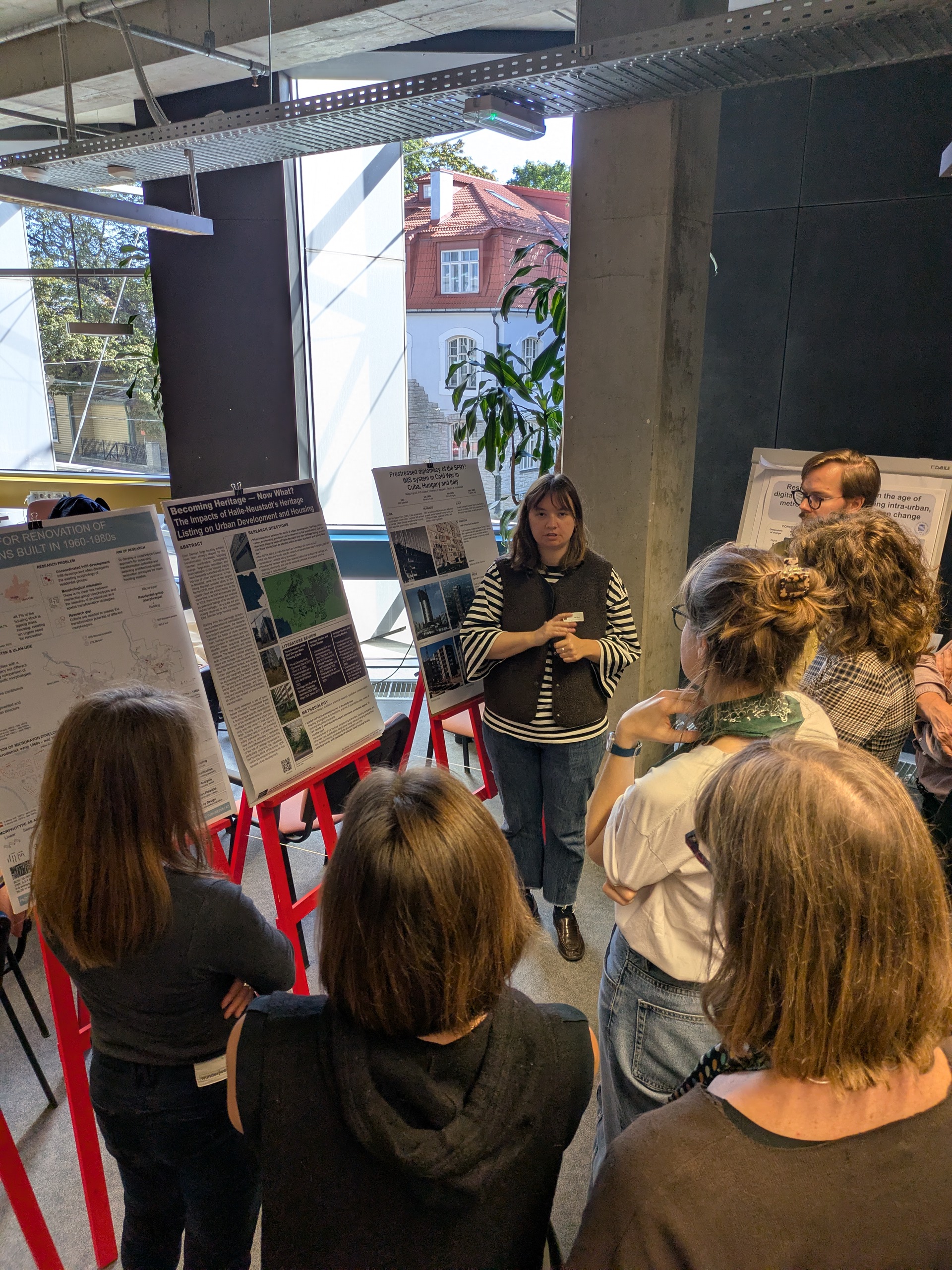
Photo by: Liliana Iuga
A central component of the PhD School was fieldwork in Lasnamäe, Tallinn’s largest Soviet-era mass housing district. Following meetings with local experts, participants explored the district through field observations and two guided formats: a multispecies walk with Hildegard Reinmann and a walk and talk on community-led urban development with Maria Derlõš from Lasnaidee. These activities connected academic discussions with everyday practices, local initiatives, biodiversity, and community perspectives in the district.
Building on the lectures, discussions, and field observations, participants worked in three interdisciplinary groups focusing on (1) Retrofitting and Renovation, (2) Maintenance, Governance and Community, and (3) Open Spaces and Mobility. Using mapping, photographic documentation, stakeholder analysis, informal interviews, and interdisciplinary discussion, the groups identified key challenges and opportunities for the future transformation of mass housing estates and presented their findings on the final day of the PhD School.
The PhD School provided a lively platform for connecting emerging research with local knowledge and international perspectives on socialist-era residential heritage. By combining academic exchange with direct engagement in Lasnamäe, the programme highlighted the need to approach the future of mass housing not only through the renovation of buildings, but through the interconnected questions of public space, mobility, governance, community life, heritage, and climate adaptation.

Photo by: Liliana Iuga