




25 May – 05 June 2026
In May–June 2026, the Integrated Action Approach team, Elena Batunova and Albina Davletshina, conducted a two-week fieldwork campaign in Gyumri, Armenia, examining everyday housing governance and residential resilience nearly four decades after the 1988 Spitak earthquake.
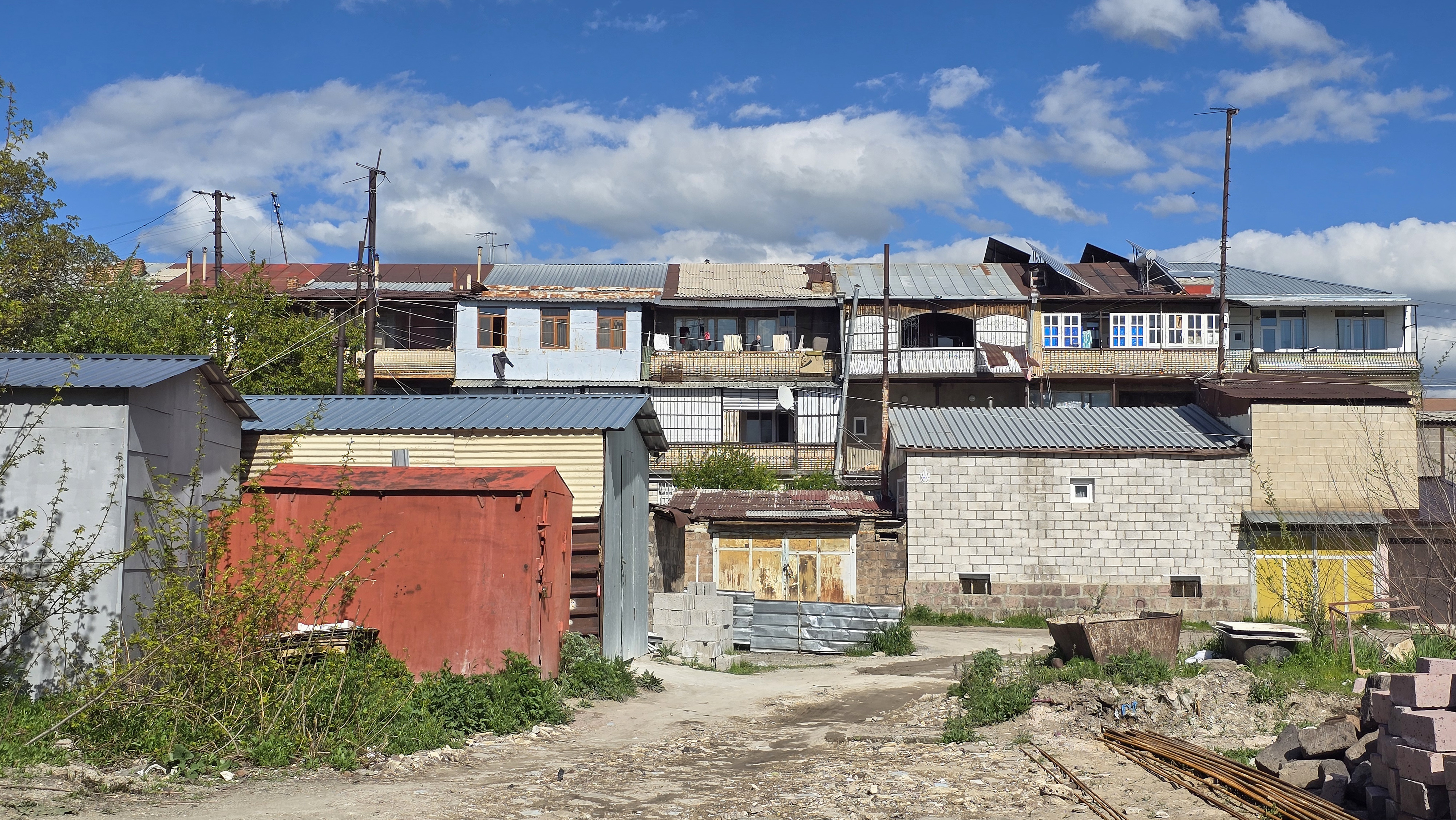
Building on previous field visits, the research focused on a diverse range of post-earthquake housing environments, including unfinished residential districts, temporary settlements that have evolved into permanent neighbourhoods, partially abandoned apartment buildings, and centrally located structures awaiting reconstruction or resettlement. Through interviews, site observations, and extensive visual documentation, the team explored how residents, housing managers, local experts, and community actors navigate long-term uncertainty and ongoing infrastructural deficiencies.
A central objective of this fieldwork was the further development of the project’s co-production approach. To this end, the team organised and facilitated three resident-based workshops that brought together households facing different housing challenges. These discussions created opportunities to exchange experiences, compare coping strategies, and reflect collectively on local priorities, future aspirations, and obstacles to improving living conditions. The workshops also provided valuable insights into how knowledge about housing problems and potential solutions is produced and shared within communities.
The fieldwork highlighted the diversity of housing trajectories that have emerged in Gyumri since the earthquake. While some residents have gradually improved their homes through long-term self-investment and adaptation, others continue to face severe structural deterioration, insecure tenure, inadequate infrastructure, and limited institutional support. Across these different contexts, residents have developed a wide range of practices to maintain housing, organise everyday life, and compensate for gaps in formal governance.
The findings reinforce one of the key observations of the project: housing resilience in post-disaster cities is not the outcome of a single recovery programme but rather the result of continuous interactions between residents, professionals, local organisations, inherited planning decisions, and changing socio-economic conditions. The collected material will contribute to the project’s ongoing comparative analysis of governance approaches and resilient sustainability in Soviet-era residential heritage across Armenia, Latvia, and Estonia.