





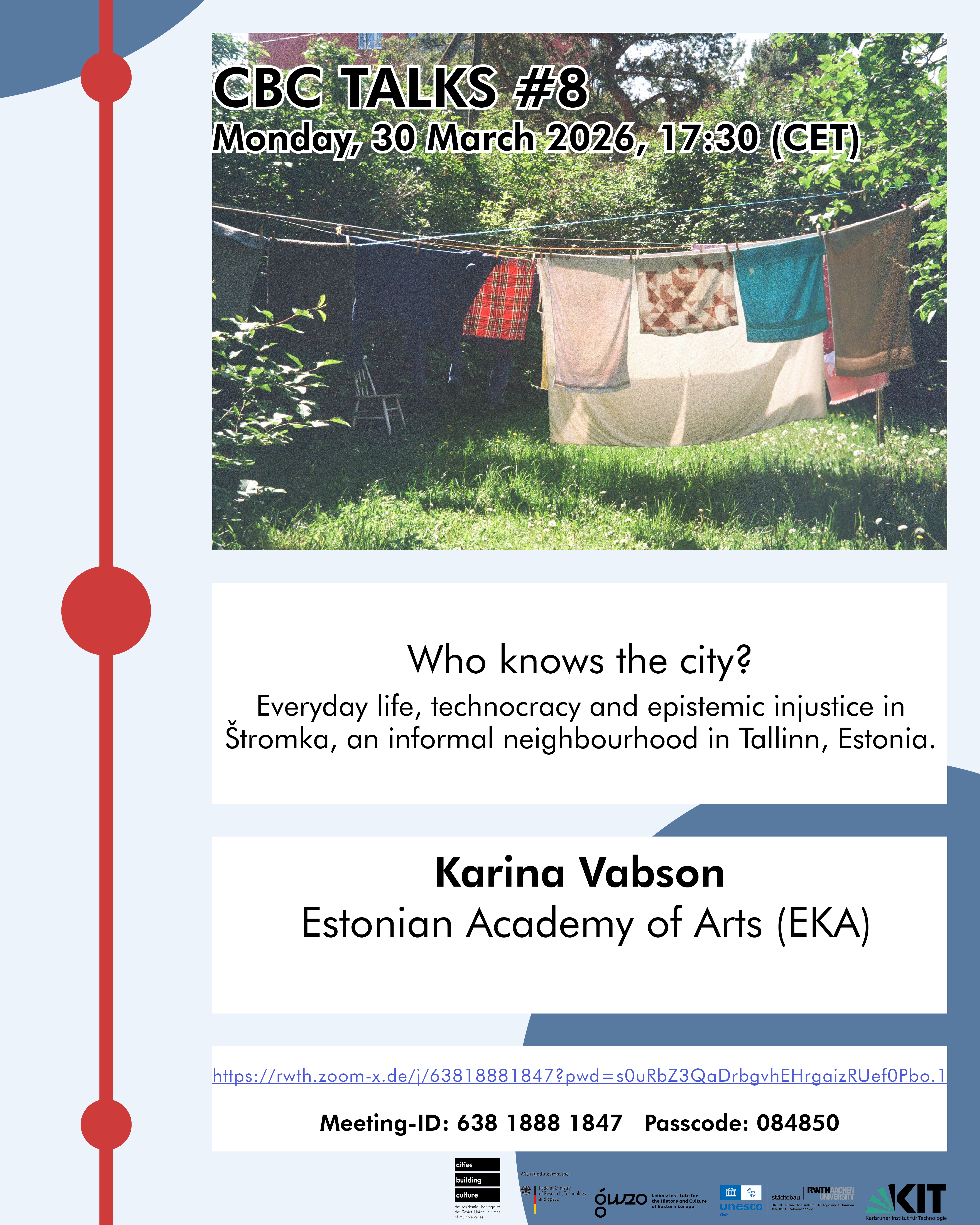
Who knows the city? Everyday life, technocracy and epistemic injustice in Štromka, an informal neighbourhood in Tallinn, Estonia
We live in a technocratic era that trusts numbers over lived experience – and Tallinn is no exception, where data-driven decisions about schools, housing, and mobility have generated real conflicts between political forces and communities. Without genuine community engagement, experts, urban planners and politicians fall back on data or their own limited perspectives of the city. Technocracy thus tends to deepen rather than resolve injustice and inequality, as certain ways of knowing the city get systematically ignored. Anthropology – here as opposed to technocracy – offers an alternative: by taking everyday life seriously, it builds the empathy needed for real dialogue, the foundation of democracy.
My case study is one of Tallinn's post-Soviet neighbourhoods, where both planned and ongoing transformations illustrate how technocratic governance and planner-driven narratives generate conflict, raising urgent questions of epistemic injustice: whose knowledge counts, and whose priorities are centred?
Community opposition to "regeneration" is never groundless – it carries knowledge. The task is finding ways to make that knowledge legible, empathy-generating, and impossible to ignore. Recognizing the diversity of knowledge forms – including, in my case study, nostalgia as knowledge form and a means of memory preservation – is a precondition for more just and inclusive urban governance.
When: Monday, March 30, 2026, 5:30–7:00 PM
Link: https://rwth.zoom-x.de/j/63818881847?pwd=s0uRbZ3QaDrbgvhEHrgaizRUef0Pbo.1
Meeting-ID: 638 1888 1847
Kenncode: 084850