




When Sustainability Leads to Demolition
by Albina Davletshina
As this article is being written, demolition of the former Ministry of Social Affairs and Employment (SoZa) in The Hague is scheduled to begin on 1 July 2026. The demolition permit has already been issued, while public debate continues. Only a week earlier, on 23 June, representatives of the Save SoZa initiative delivered an international petition with more than 4,500 signatures from over 90 countries to the Dutch House of Representatives, asking politicians to reconsider the planned demolition.
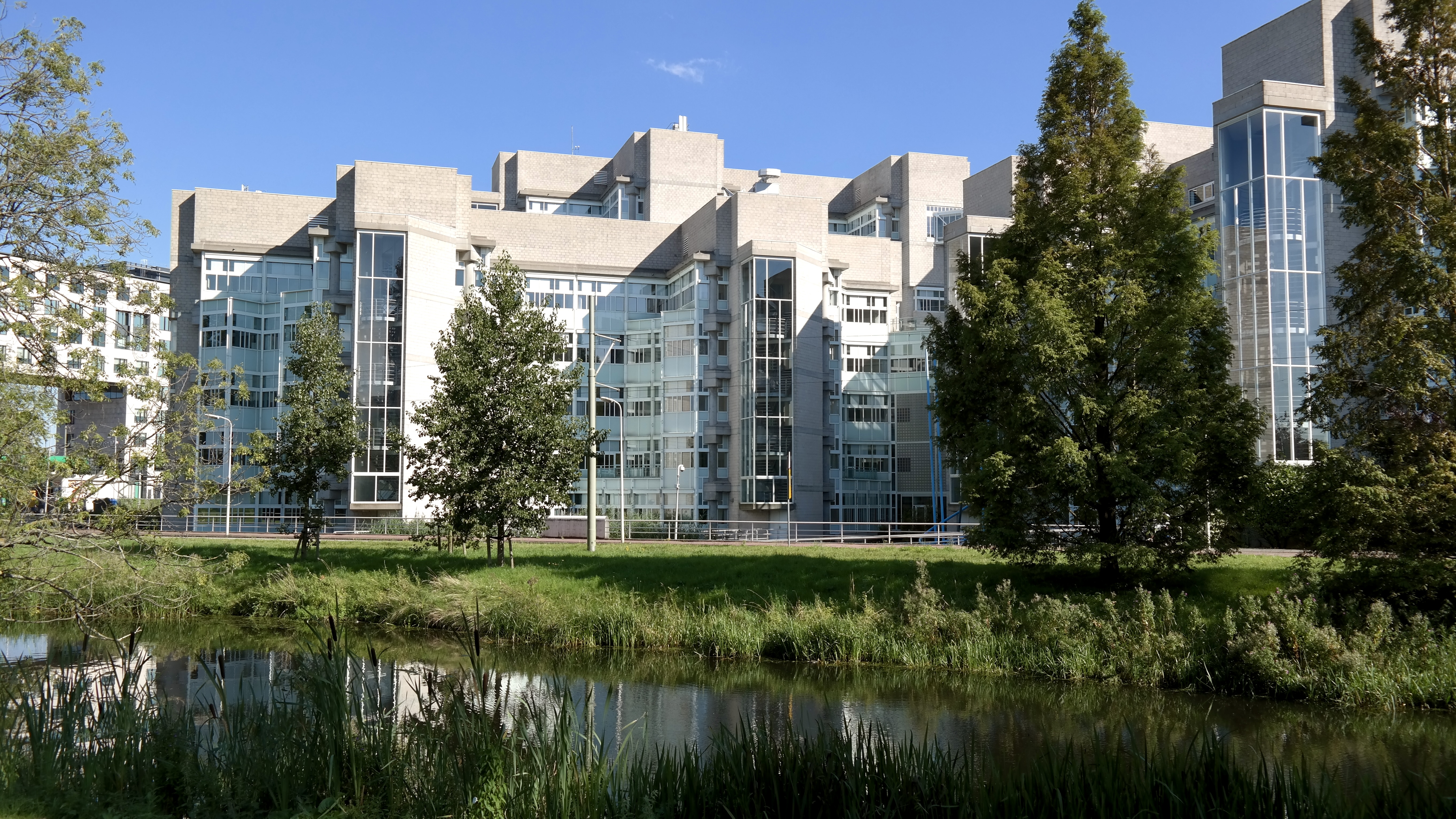
The former Ministry of Social Affairs and Employment (SoZa) in The Hague, designed by Herman Hertzberger and completed in 1990. Photo: Choinowski, 2015, via Wikimedia Commons.
Regardless of the outcome, however, the SoZa debate has already become much more than a discussion about one building. It reveals a series of contradictions that extend far beyond The Hague and raise broader questions about what sustainability has come to mean in contemporary urban development.
As this article is being written, demolition of the former Ministry of Social Affairs and Employment (SoZa) in The Hague is scheduled to begin on 1 July 2026. The demolition permit has already been issued, while public debate continues. Only a week earlier, on 23 June, representatives of the Save SoZa initiative delivered an international petition with more than 4,500 signatures from over 90 countries to the Dutch House of Representatives, asking politicians to reconsider the planned demolition. Regardless of the outcome, however, the SoZa debate has already become much more than a discussion about one building. It reveals a series of contradictions that extend far beyond The Hague and raise broader questions about what sustainability has come to mean in contemporary urban development.
Designed by Herman Hertzberger and completed in 1990, the Ministry of Social Affairs and Employment is widely recognised as one of the most significant examples of Dutch Structuralism.
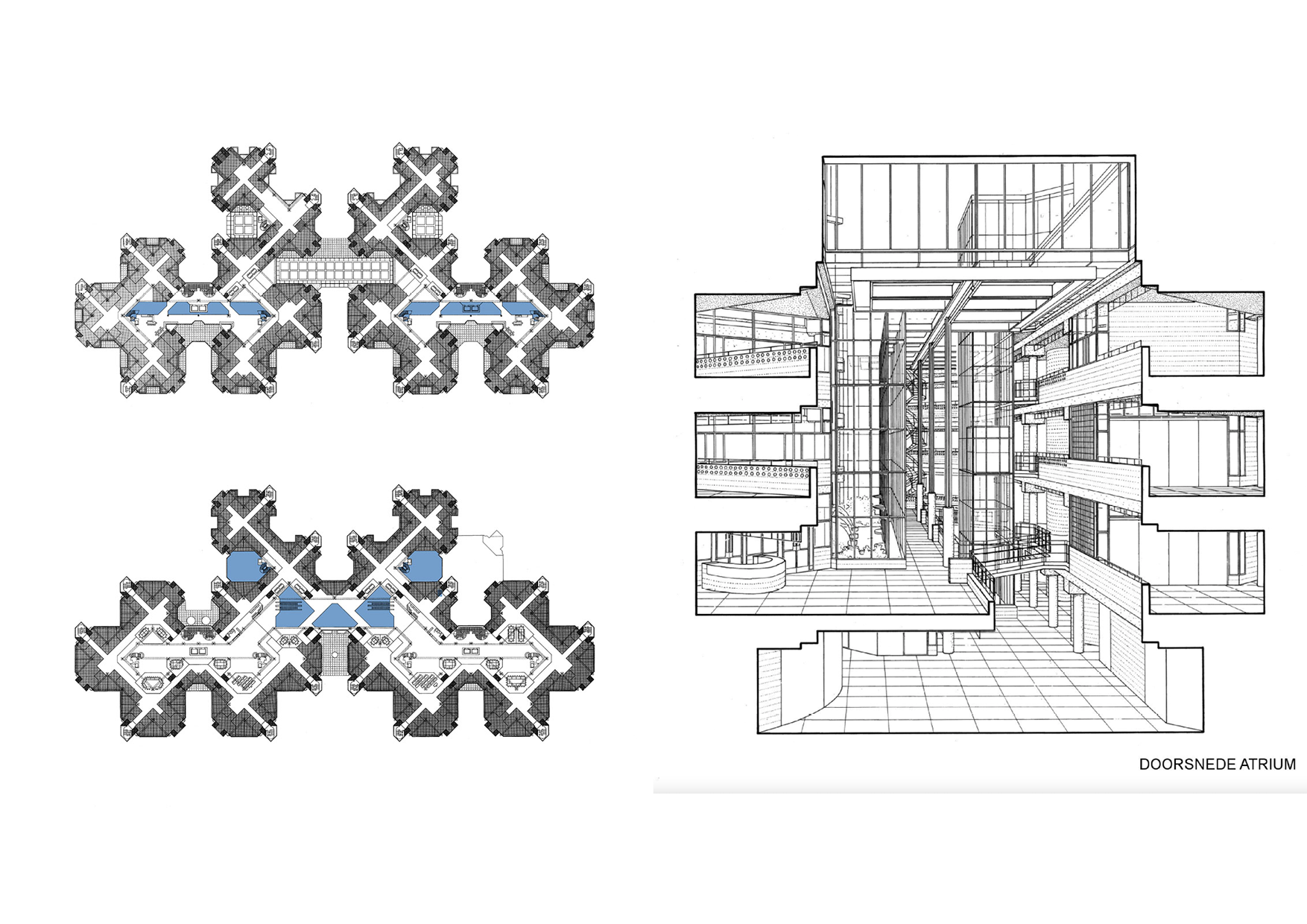
Floor plans and section through the central atrium of the SoZa building, illustrating its spatial organisation and interconnected interior spaces. Drawings: AHH, via Archined.
But what makes SoZa particularly relevant today is not only its architectural significance. It is the architectural idea that guided the building's conception. Hertzberger did not see buildings as finished objects. He designed them as open frameworks capable of accommodating changing users, functions, and societal needs over time. Adaptation was therefore not an additional quality that could be introduced later. It was embedded in the architecture itself. Ironically, it is precisely this building, designed around the principle of adaptation, that is now facing the threat of demolition.
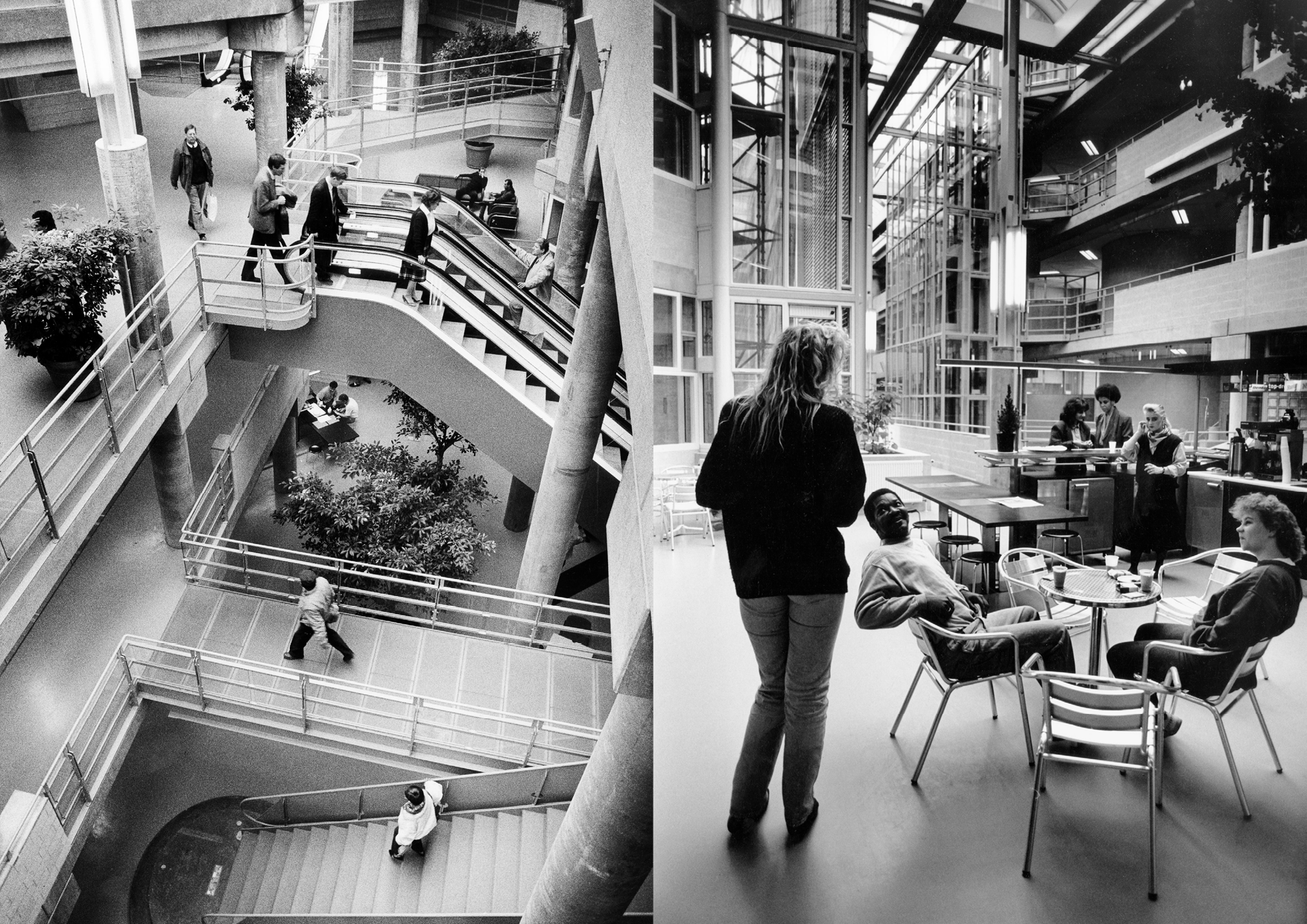
The open interior structure of SoZa. Photo: Johan van der Keuken and Herman van Doorn, via Architectenweb.
Demolition as Sustainability
The redevelopment of the SoZa site is presented as a model of sustainable urban development. According to the project team, it will deliver around 1,200 new homes, along with offices, public amenities, generous green spaces, biodiversity measures, and climate-conscious design. The project promises a sustainable urban neighbourhood for The Hague. However, this sustainable future begins with demolishing approximately 140,000 square metres of a structurally sound building containing enormous quantities of concrete, steel and glass. At a time when Europe is promoting circular construction, reducing embodied carbon and preserving material resources, this raises an obvious contradiction.
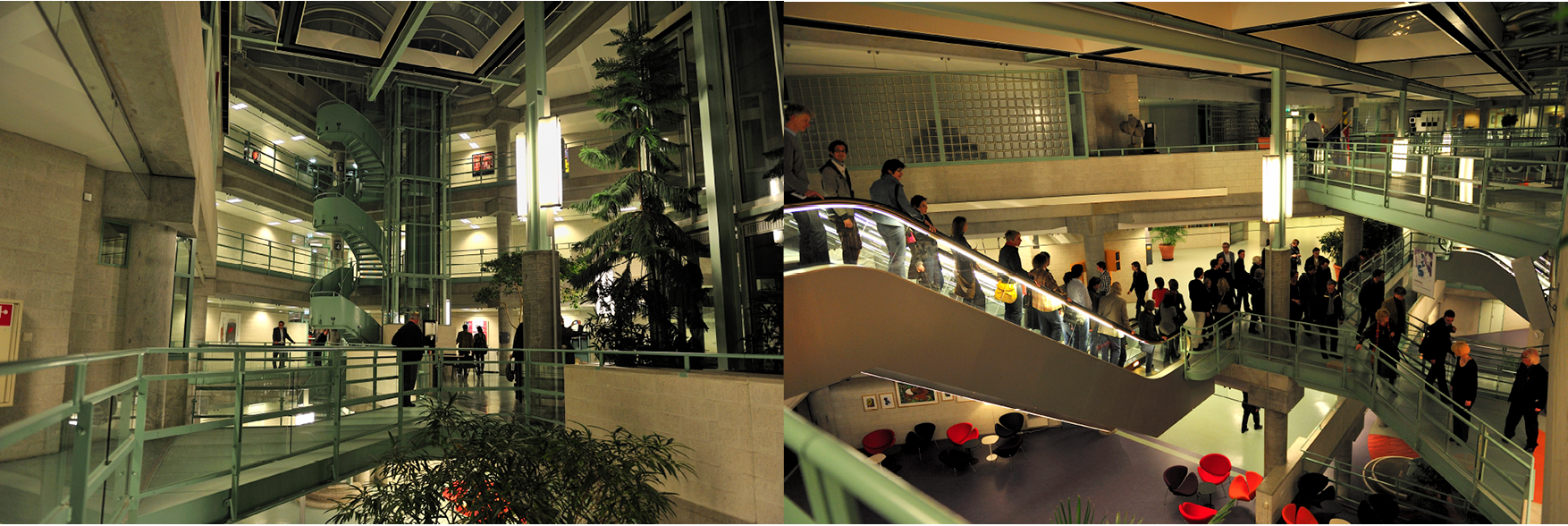
The former Ministry of Social Affairs and Employment (SoZa) in The Hague, designed by Herman Hertzberger and completed in 1990. Photo: André P. Meyer-Vitali, 2010, CC BY 2.0, via Wikimedia Commons.
The point is not to argue that new construction is never justified. Cities must evolve, housing is urgently needed, and buildings cannot be preserved indefinitely. The question is different: if sustainability begins with demolition, what exactly do we mean by sustainability?
Demolishing Adaptability
Across Europe, adaptive reuse has become one of the defining principles of sustainable urban development. Existing buildings are increasingly recognised not only as cultural assets but also as environmental resources whose continued use can significantly reduce carbon emissions and material consumption. SoZa makes this principle particularly compelling because it was designed precisely with future adaptation in mind. Its structural framework was conceived to accommodate changing functions rather than become obsolete.
Adaptive reuse was not an idea introduced only after demolition became likely. Between 2016 and 2018, the developer VORM commissioned several studies exploring whether the existing building could be transformed rather than replaced, involving Herman Hertzberger, AHH and other architectural teams. The studies, however, produced different conclusions. VORM argued that retaining the building was incompatible with the required development programme, planning objectives and the project's economic viability. Hertzberger and AHH maintained that the structural framework remained fully capable of accommodating new functions.2
This disagreement shifts the discussion beyond architecture. It suggests that adaptation is not determined solely by a building's qualities. It is also shaped by planning priorities, development objectives and economic assumptions. Who defines the conditions that make adaptation impossible?
Generic Architecture and Place Identity
There is little doubt that The Hague needs more housing, nor that cities must continue to evolve. The question is not whether urban transformation should happen, but what kind of urban environment it ultimately produces. Looking at the proposed redevelopment, it is surprisingly difficult to identify where this project belongs. Similar developments can be found in Toronto, Melbourne, Hamburg, Singapore, Seoul and dozens of other cities. The architectural language has become increasingly generic, while the identity of place becomes increasingly difficult to recognise.
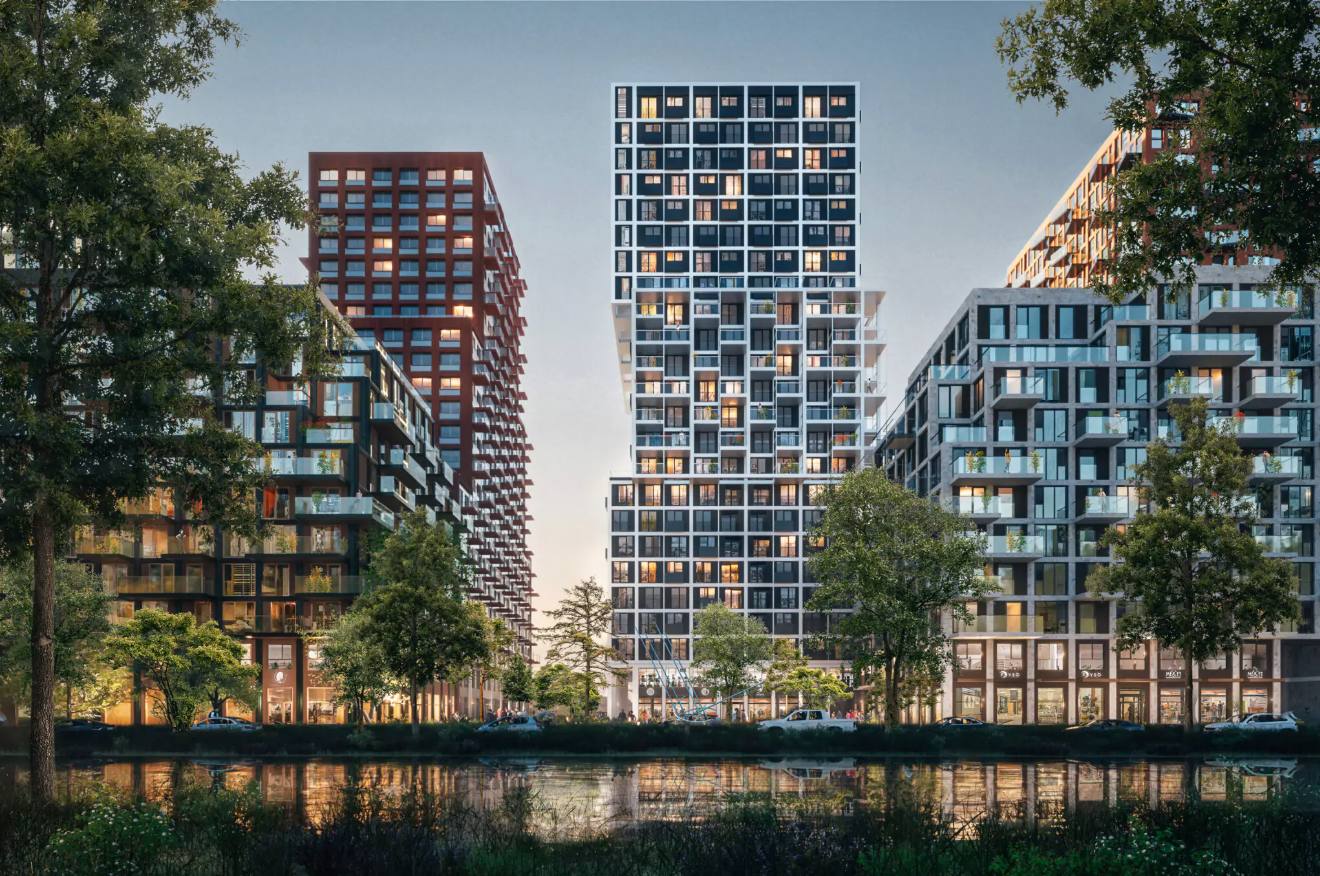
The proposed redevelopment of the SoZa site, replacing the existing building with a new mixed-use neighbourhood of housing, offices, amenities and public spaces. Rendering: Barcode Architects.
The irony is difficult to ignore. The redevelopment will retain the name SoZa while demolishing the building that gave it its identity. At a time when initiatives such as the New European Bauhaus argue that sustainability should also be about beauty, culture and place-making, the SoZa project raises a fundamental question: can local identity still be produced through increasingly generic architecture?
Sustainability as Product or Process?
The final paradox goes beyond architecture. Too often, sustainability is presented as a product to be delivered: greener buildings, biodiversity measures, climate-neutral technologies and attractive public spaces. Society's role is largely reduced to becoming the future consumer of a sustainable neighbourhood.
But what if sustainability is not a product, but a process? If we take that idea seriously, then the existing SoZa community: architects, researchers, heritage organisations, citizens and initiatives such as Save SoZa, is not standing in the way of a sustainable future. They are already helping to define it. A sustainable city is built not only through new developments, but through society's ability to debate what should be preserved, what should be transformed and what kind of future it wants to create.
Beyond SoZa
The SoZa debate is ultimately not about one building. It is about the meaning of sustainability. If sustainability begins with demolition, if a building designed for adaptation becomes impossible to adapt, if place-making produces increasingly generic architecture, and if sustainability is understood as a product delivered to society rather than a process created with society, then SoZa is not an isolated controversy. It reveals contradictions that many European cities are already facing.
Whether SoZa ultimately survives or not, those contradictions will remain. The question extends far beyond the future of one building in The Hague: what kind of sustainability are European cities choosing to build?
2. https://architectenweb.nl/nieuws/artikel.aspx?id=55773